pasture

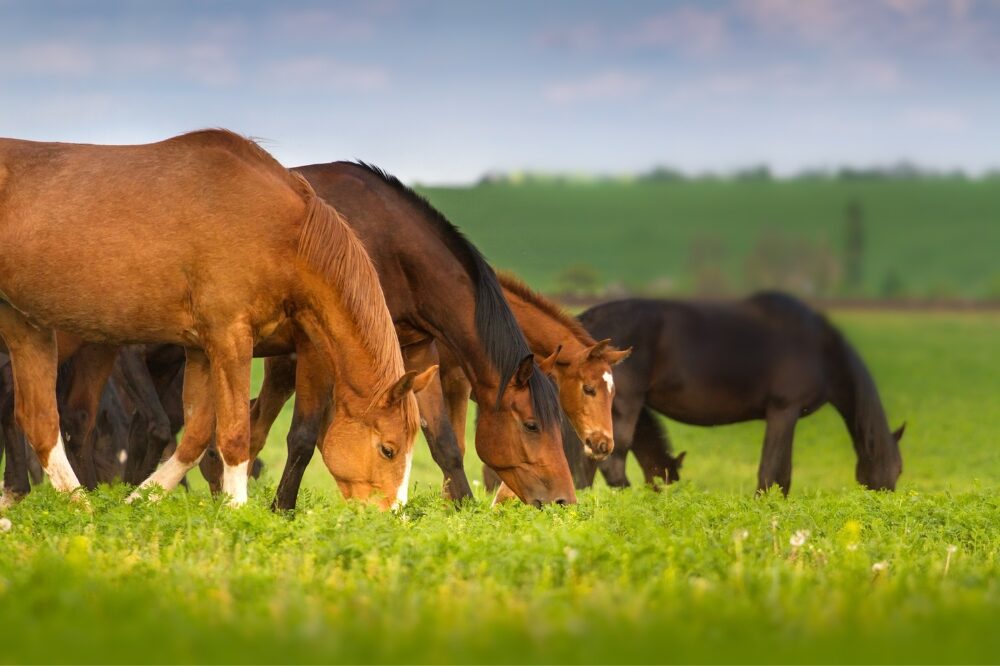
a herd of horses and a foal grazing on spring pasture

Pasture-Associated Laminitis

Pasture-associated laminitis is closely linked to grass intake and metabolic health, especially in spring and fall when sugars in pasture run high. Horses with insulin resistance or other metabolic conditions are at greater risk of painful hoof inflammation. Early signs like hoof heat and a strong digital pulse can signal trouble before serious damage occurs. Prevention centers on controlled grazing, body condition management, and reducing pasture sugar intake.

Pasture-Associated Laminitis Read More »

herd of horses standing in muddy pasture that is brown and overgrazed

Brown Grass for Horses

Brown pastures are often assumed to be safer for grazing horses, but dormant forage can still contain significant sugar levels. Seasonal stress from drought, frost, or overgrazing changes how grass stores carbohydrates, which directly affects equine health. Metabolic horses, including those with EMS or PPID, face greater risks when grazing stressed fields. Careful management, slow feeding strategies, and thoughtful dietary adjustments help protect horses during periods of pasture dormancy.

Brown Grass for Horses Read More »

Scroll to Top