It’s a myth that dormant or brown grass for horses is safest because it’s not actively growing and therefore must be low in sugars and starches. However, many dormant grasses store carbohydrates over winter to survive and regenerate in the spring. This situation can be risky for some horses, so it’s important to consider your horse’s metabolic health, access to pasture, and the type of pasture.

Key Highlights
- Dormant grass might look dead, but it can be high in sugar, posing a risk to horse health.
- Weather conditions such as frost and drought cause pasture to store sugars, reducing its nutritional value.
- Metabolic horses are particularly at risk for laminitis when grazing on stressed, brown grass.
- Proper pasture management is crucial for keeping your horse safe during seasonal changes.
- Even dormant grass can have surprisingly high sugar levels, so careful monitoring is key.

Defining Dormant and Brown Grass in Horse Pastures
- Dormancy in pastures often looks like crusty brown grass that’s simply taking a time-out, but there’s a little more going on. Dormant grasses stop active growth due to excessive heat and drought or seasonally during the winter. The purpose of dormancy is to keep the plant alive by conserving energy and water until conditions improve.
- The crown of a grass plant is the crucial, tightly packed stem at or just below the soil surface that serves as the growth point, linking the roots to the shoots. The crown and roots are alive and ready to grow when the weather and sunlight conditions improve. The leaves or shoots often fade to brown, become brittle, and stop growing. These leaves appear to be dead grass, but it’s ready to green up.
What causes grass to become dormant?
- Environmental stress is the primary cause of pasture grass turning brown. As it grows, grass uses sunlight, water, and nutrients to thrive. However, when faced with challenging weather conditions like drought, extreme heat, or freezing temperatures, the plant enters a dormant state to conserve resources. This is a survival mechanism and not necessarily a sign that the grass is dead.
- Different plant species react to stress in unique ways. Warm-season grasses, for instance, often go dormant as soil temperatures drop below 60°F. In contrast, cool-season grasses might turn brown during a hot, dry summer. Overgrazing is another factor that stresses grass, forcing it into dormancy to recover.
- These risk factors are important for horse owners to recognize. A brown pasture isn’t just a visual change; it signifies a shift in the plant’s internal processes, which directly affects what your horse consumes. This dormancy period alters the nutritional profile of the pasture grass, creating different considerations for your horse’s diet.
Dormancy vs. growing
- Actively growing grass is in a constant state of photosynthesis, using the sugars it produces as fuel for plant growth. When dormant, growth halts, but on sunny days, the plant can still produce sugar. If growing conditions are not ideal, the sugar is stored as carbohydrates and concentrated at the base of the plant.
- Even a brown, dormant pasture can have high sugar levels, posing a hazard to grazing horses. For many, this isn’t an issue, but it becomes problematic when high-laminitis-risk horses graze.

Nutritional Value of Dormant and Brown Grass for Horses
- Brown grass for horses can still deliver fiber and calories, but nutrients like proteins and many vitamins decline as the pasture is on hold. Many horses will never object to eating it!
- Brown grass also has protein, but not as much as when it’s growing.
- Carbohydrate content is the primary factor to consider when assessing nutritional value for metabolic or older horses. Despite not actively growing, brown, dormant grass can still have quite high levels of sugar and starch. It’s a common misconception that brown grass is low in sugar. In reality, sugar levels can be dangerously high. Stressed grass, whether from drought, frost, or overgrazing, stores simple sugars as a survival mechanism. This means dormant, brown grass can sometimes contain more sugar per pound of dry matter than lush green grass.
- For horses with equine metabolic syndrome or insulin resistance, this is a major concern. High sugar intake can trigger dangerous insulin spikes that cascade into laminitis and colic. A pasture analysis is the only way to know for certain, and it’s reasonable to assume that any horse with pituitary pars intermedia dysfunction (PPID, formerly Cushing’s) or equine metabolic syndrome (EMS) may have an increased risk of laminitis while grazing.
Fiber, Protein, and Vitamin Content Changes in Dormant Pastures
- Fiber content increases in dormant grass. Often, stems are tougher because they contain more structural carbohydrates, such as cellulose. While fiber is beneficial for horse diets, this type of fiber can make nutrient extraction more difficult.
- Different plant species have varying fiber levels, but the general trend is that as grass turns brown, digestibility decreases while indigestible fiber increases. This shift affects how much energy and nutrients your horse can get from each bite and can contribute to health issues if not managed correctly.
- Protein levels, which are highest in young, leafy growth, drop significantly in brown grass because the plant is no longer actively building new tissues. A horse’s nutritional needs for protein may not be met by grazing on dormant pasture alone.
- Vitamins also degrade over time. Vitamin E, for example, is abundant in fresh, green grass but is quickly lost once the grass is cut for hay or goes dormant. A horse relying solely on brown pasture will likely need supplementation to meet its vitamin and mineral requirements.
- These changes to pasture quality often mean you need to feed different supplements in winter and summer to fill in nutrient gaps.
Is it Safe for Horses to Graze on Dormant or Brown Grass?
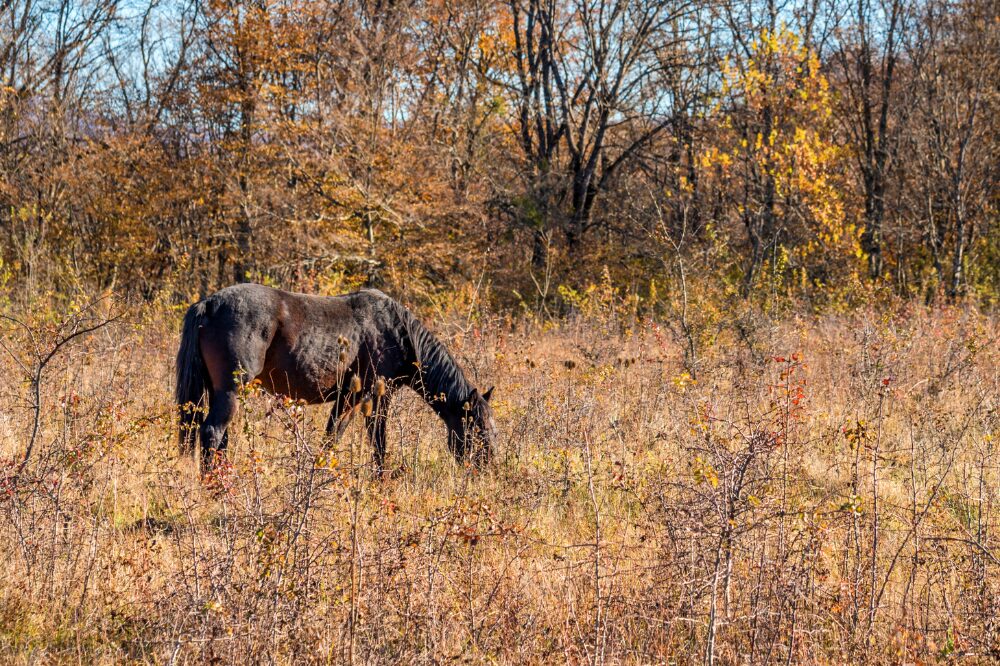
- For many horses, grazing on pasture in any season is ideal because it encourages natural movement and provides a near-constant source of forage for chewing and slow digestion.
- When you know your horse’s metabolic status, you can negate any risks of higher sugars in the grass if necessary. Your vet can be a great resource for assessing your horse’s risk factors.
Risks and Considerations for Metabolic Horses
- PPID and EMS create conditions that make horses more sensitive to dietary sugars and starches. Their bodies struggle to regulate blood glucose and insulin, and we know that high insulin levels directly correlate with an increased risk of laminitis. When fed higher sugar content in any form (commercial feeds, hay, treats, or pasture), higher carbohydrate intake triggers a dangerous insulin response.
- There are countless situations in which pasture grasses can have sugar spikes, so to speak. Spring and fall have growth spurts, cool mornings, hot, sun-baked afternoons, going-to-seed periods, droughts, dormant pastures, and freshly mowed grasses, all of which are perfect opportunities for increased sugars and starches.
Safe Grazing Practices During Pasture Dormancy
- It’s always safer for horses to eat slowly. Small amounts over longer periods are better for their brains and digestive systems. Slow feeding means their hindguts receive food gradually, greatly reducing the amount of sugars and starches that enter the hindgut at once. It’s like eating a box of cookies in one sitting and getting sick, rather than eating a few at a time.
- To make grazing on brown grass safer, do these things:
-
- Have your horse tested for metabolic disorders
- Know when your pasture is stressed out
- Use slow feeding systems for hay and commercial feeds (yes, you can find slow feeders for pellets, cubes, and grains)
- Add grazing muzzles to the routine when eating pasture grass, which will also mitigate overgrazing
- Let your horse eat hay before grazing to fill their hindgut with forage and fiber
Managing Equine Diets When Pastures are Brown
- Most climates require some dietary changes. They are usually calories, nutrients, or chewing time. You’ll need to work around weather and pasture conditions, as well as hay quality, and monitor your horse’s weight and slow feeding practices to help them thrive in cold weather.
Adjusting Hay and Supplemental Feed
- Adding hay in winter supplements the brown pasture, which is often quickly eaten. Using slow feeders for said hay keeps their digestive systems and brains happy.
- Because dormant grasses are lower in protein, a higher-protein hay, such as legumes (alfalfa, clover, peanut) or legume mixes, can help. There are also protein supplements.
- To address vitamin and mineral gaps, an all-in-one supplement can help. Often, horse owners supplement with vitamin E to make up for the missing vitamin E in hay.
- For hard keepers, adding calories is always a good idea in winter, and there are supplements for that, too.
- If you prefer commercial feeds, you could skip supplements and feed a complete feed, which provides a lot of calories, or a ration balancer, which addresses nutritional gaps without extra calories.
Signs Your Horse Needs Dietary Changes
- Your horse will often show subtle signs that their diet needs adjusting long before major problems arise. Paying close attention to these clues can help you protect your horse’s health when pastures turn brown. One of the first indicators can be a change in manure consistency or signs of digestive upset.
- Watch for these signs that a dietary change is needed:
-
- Noticeable weight loss or gain. Use a weight tape regularly to monitor for trends.
- A dull coat or poor hoof quality, although these can take months to appear.
- Changes in manure, such as diarrhea or excessive dryness, color, frequency, location, or volume.
- Lethargy or a decrease in performance and energy levels.
Behavioral changes
- When pastures become dormant, you may notice behavioral changes in your horses. With less palatable forage available, they might spend more time searching for food. This can include pawing through snow to reach the sugary base of plants or eating weeds and woody plants they would normally ignore.
- These changes can impact their body condition. Healthy horses might maintain their weight, but some may experience weight loss if the dormant pasture doesn’t provide enough calories. On the other hand, if the brown grass is high in sugar, easy keepers could gain weight or develop metabolic problems.
- Monitoring your horse’s diet and behavior is crucial. If you see signs like persistent foraging, eating unusual plants, or a noticeable change in body condition, it’s a clear signal that the pasture is no longer meeting their nutritional needs, and adjustments are necessary.
Video



Go Shopping
Stock up here for your horse supplies! As an Amazon Associate, I earn from qualifying purchases, but it’s ZERO extra cents to you. As a Walmart Associate, I earn from qualifying purchases as part of their affiliate plan. I appreciate your support! You can also visit my Amazon storefront here: PEG storefront.

Omega 3's plus gut health support in a delicious cold milled flax formula. It's delicious and it will turn your horse's coat into a mirror.

These pellets are more affordable than the bigger brands, and ship right to your door. Support small businesses!


2 sizes of this slow-feeding hanging hay toy - snack size holds a few flakes, and the half size holds 1/2 bale. There's also an XL that ground feeds.
Use code 15PROEQUINE for sitewide savings on slow feeders and more.