Horse Training Ideas and Exercises
- Training isn’t only from the saddle or the lunge line. Every interaction with your horse is an opportunity to provide positive feedback and strengthen your bond. You may also find your horse has increased confidence, trust, and mental stimulation when working with you out of the tack.
“Clicker Training” to Engage Your Horse
- Positive reinforcement, often referred to as R+, is a fantastic way to teach your horse a new language, using a clicker as a reinforcing bridge between an action and the reward. The premise allows you to teach your horse a few basics and eventually build on them to tackle more complex scenarios.
- It’s common to teach your horse to target something, such as a ball or a buoy on a stick. When they touch the object, you click and reward. This teaches them to touch something with their nose, learn a new word, and be rewarded for this. Then you can place the object in different scenarios to improve behavior. The perfect example for this is trailer loading. Your horse can associate the trailer and loading with something they know, the target, and a reward.
- None of this happens overnight. The baby steps of clicker training eventually build into scenarios where you can ditch the target and the clicker to teach your horse anything with your voice and hand signals if you like. You can teach them to move, stand still, turn, back up, bow, make faces, and even practical things like taking medications.
- There are many books about this (see the links below) that walk you through every single step.
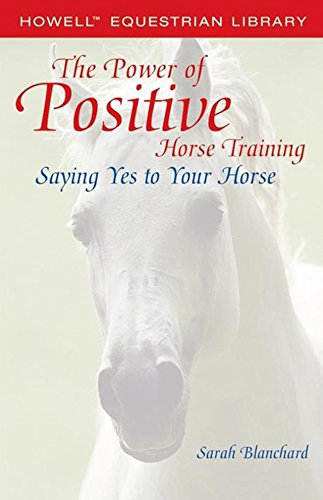
Here are some great books about R+ horse training.


$29.99$26.66
Groundwork Exercises and In-Hand Training for Horse Enrichment
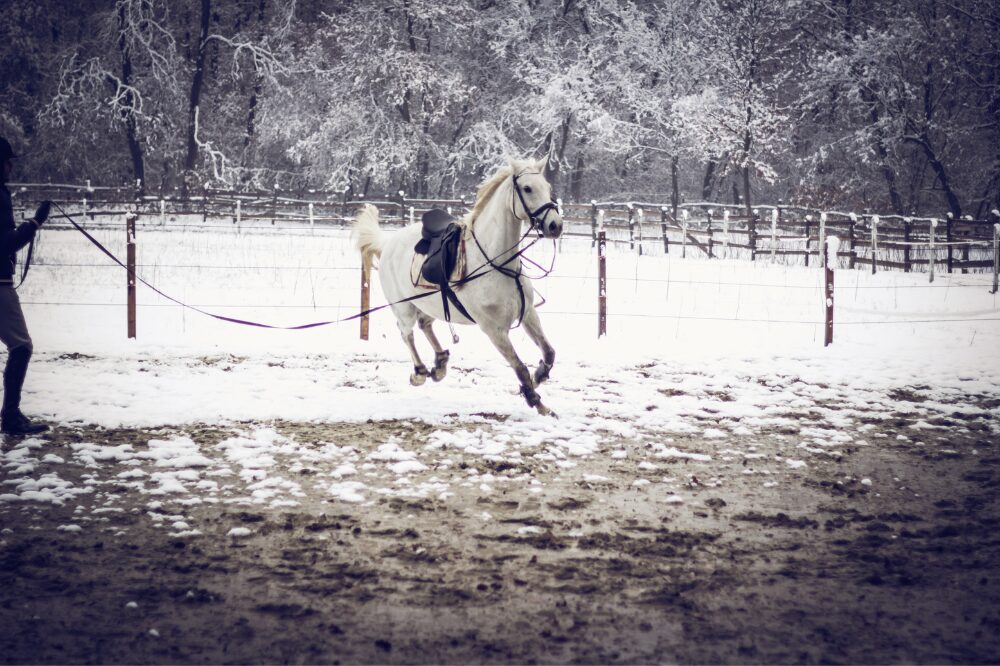
- Groundwork is one of the most valuable things you can do with your horse, especially when you’re not riding as much. You can lead your horse through patterns, circles, and figure eights, asking for halts and back-ups to keep them mentally engaged. Then you can do it in reverse.
- You have the option of leading your horse or working on the lunge line. This choice will depend on how much your horse can keep their hooves near the earth and not the sky. If you are so inclined, do some pole work at different gaits to improve hoof placement.
- In-hand exercises allow you and your horse to concentrate on your body language and hand signals. You can do the same exercises by long lining as you would by lungeing.
- Use this time to focus on practical applications – such as opening and closing gates, sidepassing, backing up, turning on the haunches and the forehand, loading into the trailer, standing quietly, square halts, jogging for the vet, and anything else your horse needs.
- When you pair these exercises with positive reinforcement, your training becomes more rewarding for everyone.
- Whatever games and exercises you choose, make sure the ground outside is safe if you don’t have an indoor arena.
| Product Image | Product Name / Price | Primary Button |
|---|---|---|
|
|
||
|
|
|


Stretching Exercises
- Less movement means stiff muscles and joints for many horses (and their people). Carrot stretches can help relieve stiffness and are a fantastic way to deliver treats and turn your horse’s focus to you.
- Let your horse tell you what their limits are. They don’t have to pretzel themselves for a carrot – going halfway is fine. The goal is to encourage flexibility without causing discomfort or injury.
- Your vet is a great resource for learning stretches suited to your horse and their ailments.
| Product Image | Product Name / Primary Rating / Price | Primary Button |
|---|---|---|
|
|
|
|
|
|
|


Safe Horse Toys for Indoor and Outdoor Play
- There comes a point in the cold wind and yucky weather when horses need to burn off some steam with play. For some horses, a good roll and buck in a safe round pen, paddock, or pasture does a world of good.
- Providing safe toys can prevent boredom and keep your horse entertained, especially if turnout areas or time are limited. Enrichment toys encourage natural behaviors and problem-solving skills.
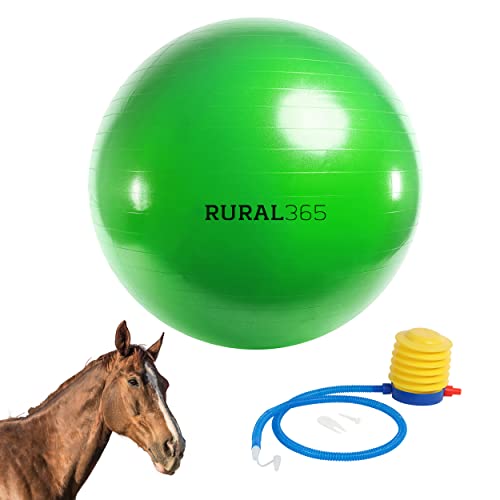
- Many horses enjoy physical play toys they can push, chase, or shake. A giant yoga ball is a perfect option for winter play, allowing your horse to kick and roll it around. You can even teach your horse to fetch or roll the ball back to you, which is a great way to bond and easy with positive reinforcement training.
- Rotate toys to keep interest up.
- When choosing enrichment toys, there are many options!
-
- Treat balls that dispense food as a nose pushes them.
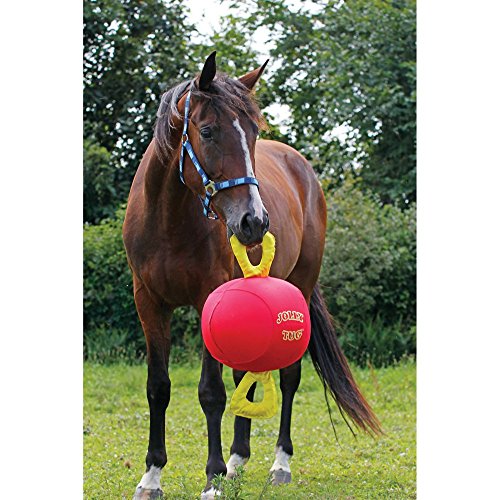
- Hanging jolly balls designed for horses. Stuffies work well, too, for some horses.
- Slow feeders that can roll around on the ground.
- Use pool noodles to create obstacles or visual interest.
|

|
|

|
|
$34.65
|
|
$97.98
|
$12.99
|
Food-Based Winter Enrichment for Horses
- Horses are natural foragers, and providing opportunities for them to search for food is incredibly enriching. Food-based enrichment and forage puzzles engage their minds while satisfying their instincts, while keeping their digestive systems happy. You need them to clear manure from rooter to tooter and not end up with an impaction colic.
Keep the Hay Available
- You can use various tools like slow feeders, hay balls, or treat balls. Slow feeders are the norm at many barns, which is great, but you can change things up.
- Double-net your slow feeders to allow slow feeding, but a little more challenging.
- Put many slow feeders around the turnout areas to encourage movement.
- Use a hay slow feeder mat on the ground that horses can share in a herd setting. These are like feed bags with holes, only more durable.
- Try hay bags that roll around for movement and winter enrichment for horses.
Here are some great options.
Product Image
Product Name / Price
Primary Button


Treat Toys
- A healthy winter routine can include treats, too! If your horse requires a low-sugar and low-starch diet, using hay cubes or pellets instead of treats is safe and more affordable than fruits or traditional horse treats.
- Rolling treat toys are great because they encourage movement and problem-solving, and are ideal for pellets, cubes, and cut-up fruits or veggies.
- Hanging treats often disappear quickly, but some horses can stretch them out longer.
- Bring R+ training into treat dispensing. You could teach your horse to touch a shape for a specific treat reward. Or you could ask them to identify a bucket or a brush among a few objects to earn a treat.
Try these options:

|

|

|
|
Primary Rating:
3.5
|
Primary Rating:
3.5
|
Primary Rating:
3.5
|
|
|
$25.99
|
$4.99
|
Give Your Horse a Water Buffet
- Now is the best time to find out what entices your horse to drink. You can set up a watering station to experiment with different flavors.
- Gather a few buckets and fill each with water. Leave one “plain,” so your horse has that choice, too. Then add a few glugs or sprinkles of some treats to each bucket. You could try:
-
- Apple juice
- Gatorade
- Powder electrolytes
- A handful of flaxseed
- A handful of your horse’s “grain”
- Some chopped-up carrot or apple, but this can get messy
- A handful of hay
- This experiment can help you anytime your horse needs to drink more.
This is my favorite flaxseed and water additive:
Omega 3’s plus gut health support in a delicious cold milled flax formula. It’s delicious and it will turn your horse’s coat into a mirror.

Here are some winter-ready buckets:

|

|

|
|
Primary Rating:
3.5
|
Primary Rating:
3.5
|
Primary Rating:
3.5
|
|
$179.00
|
|
$46.32
|
Winter Enrichment for Horses – Stabling and Paddocks
- Your horse’s environment plays a huge role in their well-being, especially during the winter months when they may spend more time in an enclosed area. Even small changes to their stall or paddock can reduce stress and support natural behaviors, transforming their living space into a more engaging place.
Visual Stimulation in the Barn
- Let your horse see the world! If the weather keeps your horse in the barn, ensure lots of sight options. Open windows are a plus for ventilation and visual stimulation. Using stall guards or yoked stall doors also adds visual interest.
- You can also add novel objects to their environment. Hanging things like colorful pool noodles, squeaky chickens, stuffed animals, or even different brushes with various textures can provide new things to look at and investigate. The key is to introduce new, safe items to keep their surroundings interesting and engaging.
- Some horses may enjoy a mirror in their stall. A shatter-proof one, of course.
Turnout Strategies for Mental Stimulation
- Turnout is the best exercise for a horse’s mind and body, but winter can make it tricky. You may not be able to rotate paddocks to give them new places to hang out, but you could add hay bales and a buddy. You will also find that horses turned out for longer periods and more consistently often don’t have the wild zoomies and bucking fits that some stalled horses exhibit as soon as they are turned out.
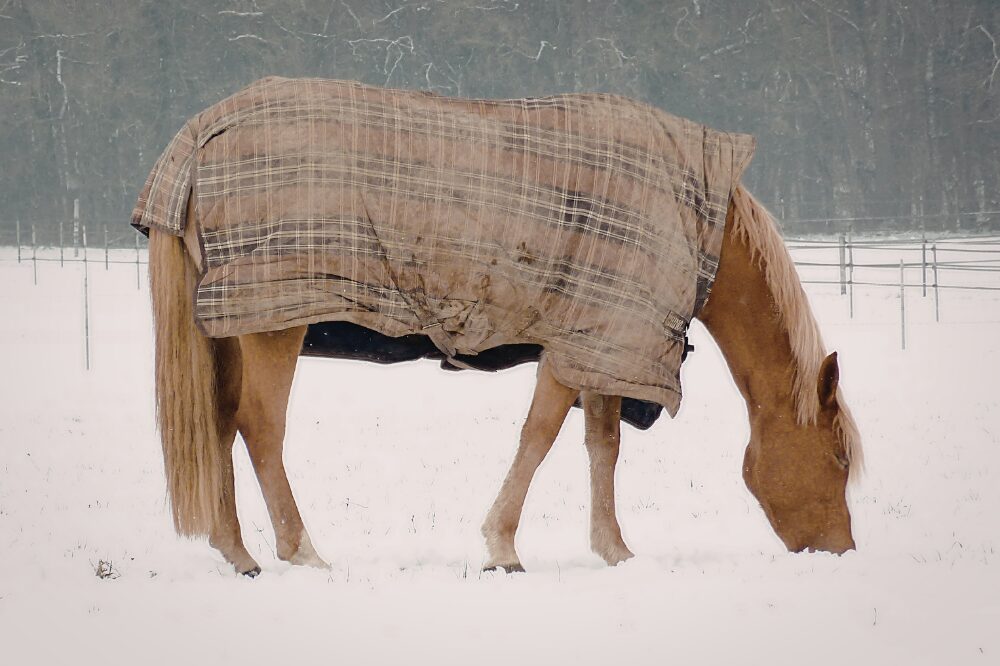
- Keep your horse warm for turnout. Use blankets if needed. There’s nothing wrong with helping your horse stay warm and conserve calories.
- Check your turnout area for hazards, including ice patches and frozen ground, especially rocky frozen ground. There are plenty of horses who become masters of the hoof bruise on frozen ground.
- You may find that bigger paddocks are not always best, especially if there is steep terrain, gravel stones, and slippery areas. More space means more speed.
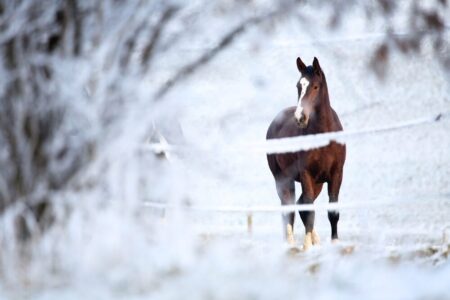
- Turnout can be a fantastic winter exercise, especially in the snow. Lifting legs to walk in deeper snow is exhausting! And do check on them to ensure they can get up after rolling.
Keep your horse healthy and happy in the fresh air of winter by engaging their minds and bodies. Spend the extra time to make their turnout and environment inviting and interesting. Explore different training techniques like R+ that rely on clear body language, create a fun challenge course, and give you ample horse time even if your riding gear takes a vacation. Winter is the perfect time to help your horse reach some new training landmarks.
Key Highlights
- Winter enrichment for horses is crucial when turnout and exercise opportunities wane.
- The good news for horse owners is that many summer enrichment toys, like treat balls, can be used indoors during the winter months.
- Simple groundwork, in-hand exercises, and liberty sessions are great ways to keep your equine partner engaged and connected with you.
- DIY boredom busters and food-based puzzles encourage natural foraging behaviors and prevent stall vices.
- Enriching your horse’s environment with visual stimulation and social opportunities is just as important as direct activities.