

Some seasons bring rain, mud, and sloppy ground, which can be tough on your horse’s hooves. While you can’t control the weather, you can adjust your hoof care routine to protect your horse from the challenges of muddy conditions. With a few proactive steps, you can prevent common issues and ensure your horse’s feet stay strong and healthy all season long.

Key Highlights
- Consistent care is essential when dealing with wet weather and muddy conditions.
- Prolonged exposure to moisture can soften your horse’s feet, making them prone to problems.
- Daily cleaning is non-negotiable to remove mud and check for signs of infection.
- Providing a dry area for your horse to stand helps prevent hooves from becoming waterlogged.
- Using protective hoof products can create a barrier against excess moisture.
- Proper nutrition and regular farrier visits are the cornerstone of hoof care for muddy conditions and support healthy feet from the inside out.

Understanding Muddy Challenges for Hoof Health
- Muddy conditions present a significant challenge for hoof health. There are two primary factors to consider: moisture and microbes. Sometimes these two work together, which can affect the sole, the frog, and the wall. Let’s not forget about the chance of skin infections around the hoof, too, that are less likely in dry conditions.
How Mud and Moisture Impact Horse Hooves
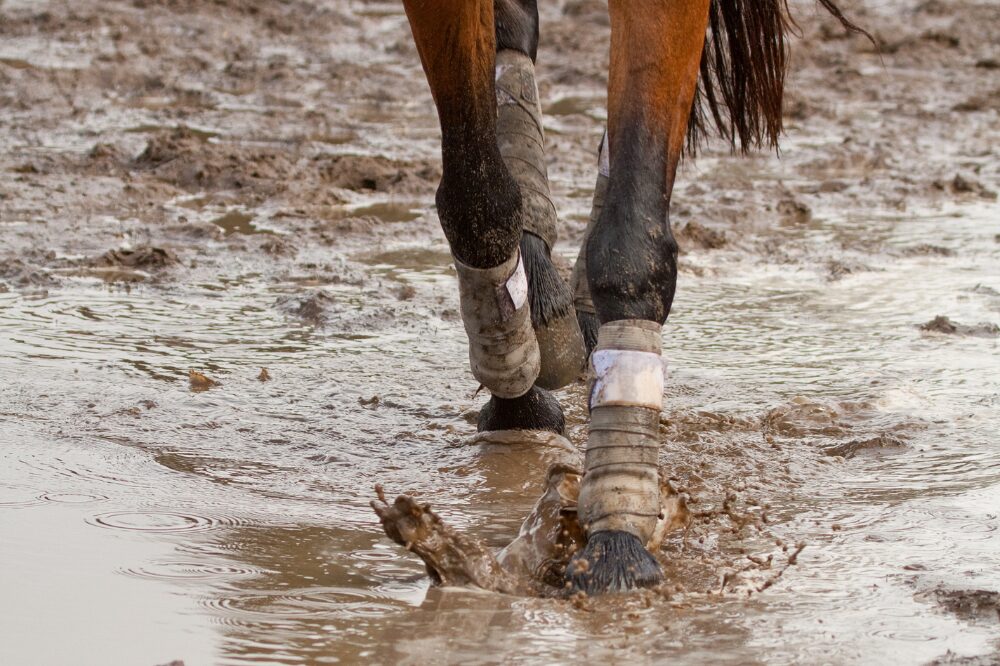
- Constant exposure to mud and wetness can seriously compromise the structure of your horse’s feet. The tough, resilient hoof wall can become soft and pliable when it remains damp for too long.
Hoof anatomy and muddy conditions
- Horse anatomy gives us some insights into how mud and moisture impact the equine foot. The wall is a tightly packed array of horse tubules, made of keratin and arranged vertically. Hydrogen bonds connect and secure the tubules to each other, and are strongest when dry.
- When living in environments that are Goldilocks perfect of wet and dry, but not too wet or too dry, the sole cups, the wall is strong, and everything acts like a shock absorber.
- When there is too much water or mud, hydrogen bonds weaken, making the tubules more flexible. This results in increased softness and weakness of the hoof. The sole can flatten, shock absorption is reduced, and walking or exercising on harder ground may become painful.
- This process invites bruising and lameness.
- The excess moisture also makes the wall more porous, creating the perfect environment for bacteria and fungi to invade. This process is easier because soft feet develop cracks, and the soles have more contact with the earth.
- This chain of events leads to thrush, white line disease, or abscesses.
The wet-dry cycle in the hooves
- When we move our horses from wet pastures to dry lots or stalls, those hydrogen bonds expand and contract, which certainly doesn’t help the feet stay strong in an excessive moisture situation. It’s more of a chicken-and-egg scenario, ultimately resulting in more damage as cracks form.
Common Hoof Issues Arising in Wet Conditions
- One of the most frequent foot problems in wet conditions is thrush. But moisture and mud don’t stop there! You may also find other annoying conditions that require veterinary attention and are sometimes emergencies.
Thrush
- This sometimes superficial infection starts in the central sulcus of the frog and spreads from there. It’s an anaerobic bacterial infection, meaning the microbes require no oxygen. The first sign of infection is a foul odor and some sticky, black goo in the grooves.
- Once thought of as a condition associated only with poor living conditions, we now know that even pristine environments can cause thrush. It’s also related to movement and hoof shape. As horses walk, their soles and frogs flex and bend, allowing oxygen into those deep grooves and helping stave off thrush infections.
Read some dry science about thrush here.
White line disease
- This often unseen condition creates a separation in the wall. Most often, microbes invade those tiny cracks you see along the hoof edge. It is presumed that bacteria and fungi join forces to eat the wall’s horn material, typically without annoying any other tissues. These microbes can create pockets in the inner hoof wall from the sole to the coronet.
- Obviously, this is bad, but the challenge with white line disease is determining its extent. Keeping cracks open and medicated with thrush medications or specific white-line treatments and soaks helps, as does X-rays to assess the extent of the damage. Severe removal of the wall, called resection, is sometimes needed.
Here’s more dry science information about white line.
Abscesses
- When bacteria are trapped inside the capsule, near sensitive tissues and bones, they can multiply into a painful abscess. They are pockets of infection that cause intense pain, and severe cases can lead to lameness. There are many ways to create an abscess, and wet, muddy conditions can contribute to them.
- These infections are caused by small punctures, bruises, the wet-dry cycle, thin soles, metabolic disorders, laminitis, horseshoe nails too close to soft tissues, or any other opening. Horses with a history of laminitis are at higher risk of developing abscesses due to the damaged laminar structures.
Read more about abscesses here.
Missing horseshoes
- Muddy conditions create the perfect storm of conditions for losing and tweaking horseshoes. Softer feet and looser nails not only create openings for infections, but they also loosen them and ungraciously assist in their removal.
Street nails
- Mud works on the equine foot to soften it, but it also tosses the earth about, almost spitting up long-buried items. Your horse’s movement and rain contribute to paddock surprises.
- Abscesses warrant a call to your vet for urgent pain relief and care, and street nails are a definite emergency. These foreign objects don’t have to be a nail. Even a sharp stick or stone can puncture the sole or coronary band.
- The tragic part of a foreign body puncture is the risk of damage to soft tissues, like laminae, tendons, and ligaments, in addition to severe infection and sometimes standing-limb laminitis in the other supporting legs.
- A handy tool to have on hand is a magnetic sweeper, like roofers use, to pick up stray metal in paddocks and around the barn.

Other Mud-Related Problems for Horses
- And the fun doesn’t stop there. Perhaps we should say “leg care” rather than simply hoof care for muddy conditions. Not only does mud create a grooming challenge, but it’s also a major contributor to skin conditions and accidents.
Mud fever
- Mud fever is a bacterial and sometimes fungal skin infection of the lower legs, typically around the pastern or fetlocks. It’s the fantastic combination of microbes, moisture, and dirt. The lack of air circulation helps, too.
- Also called scratches, it typically starts as a tiny scrape or spot that turns into a scab, which can spread up and around the leg. Oftentimes, it is difficult to treat, especially if the feathers are thick or long. The hair creates the perfect breeding ground for infections. One of your best defenses against mud fever is to constantly use your fingers and eyes to feel around the fetlocks and pasterns for the beginnings of scabs.
- Take the preventative measures to trim the fetlock hair. You don’t have to go all the way to skin, but trim it back enough so that it’s easier to clean, notice new irritations, and medicate.
Rain rot
- Rain rot is another bacterial skin infection. Typically, this looks like flaky, scaly clumps of hair and skin that pop off your horse, eventually leaving the skin a little mottled. Most of the time, your horse won’t be itchy, though with severe infections, there may be complications or secondary infections that do itch. Rain rot might also create open sores, which will, of course, attract insects, and is definitely not a good idea to mix with mud from the environment.
Accidents and soft-tissue injuries
- Many conditions often create sliding stops, and that suction effect when they step in deep mud. While nearly impossible to prevent, as horses deserve to play, mitigating mud can help prevent crashes. Less mud also helps prevent soft-tissue injuries similar to working in deep sand, but with more stick.
Daily Hoof Care for Muddy Conditions
- Consistency is your best defense against mud-related problems. As horse owners, establishing a routine for regular hoof care during wet weather is crucial for keeping your horse’s feet in top shape. The goal is to keep hooves as clean as possible, although a totally clean environment is impossible. You might not be able to do much about the drying situation, but working on keeping them clean and inspected, and catching issues such as thrush early, goes a long way toward overall hoof health.
Effective Hoof Cleaning and Inspection Routines
- Start by using a hoof pick to thoroughly remove all mud and debris from your horse’s feet. Pay special attention to the frog area and the crevices alongside it, as this is where bacteria love to hide. For a truly deep clean, follow up with a stiff brush to get the sole and wall super clean.
- If you know, you are already battling the beginnings of thrush or a white line infection that needs medication. It’s best to get your horse into the wash rack, set your nozzle to jet, and spray out the hoof so you can remove all debris before you apply any topical medication.
- After cleaning or spraying, dry the hoof as much as you can. Use a towel to absorb as much moisture as possible before your horse goes into a stall with clean, dry bedding. This step prevents the area from remaining waterlogged. Regular cleaning also gives you the perfect opportunity to inspect the hoof for any signs of trouble.
Here’s a simple routine to follow:
- Pick out hooves daily, focusing on the frog area, and don’t forget around the area where the sole meets the horseshoe.
- Use a stiff brush to remove any remaining dirt.
- Apply topical medications to fight bacterial infections, or soak the hooves in a special-formulated mix to treat white line disease.
- Look for crumbly areas, new cracks, and other changes.
- Check all nail holes and wiggle all horseshoes to make sure they are nice and firm.
- Inspect the pasterns and fetlocks for signs of scratches, mud, fever, or any swelling.
Choosing the right hoof products for rainy conditions and mud
- Selecting the right hoof products can make a huge difference in protecting your horse’s hooves from moisture. These protective treatments create a barrier that helps repel water and maintain the hoof’s natural strength. For example, a quality hoof oil can act as a sealant, preventing the hoof from becoming overly soft.
- For horses with particularly soft soles, a hoof hardener like Venice turpentine can be beneficial. It helps toughen up the sole and has antiseptic properties. If you notice early signs of thrush, mild thrush treatments are available to stop the infection from progressing. A popular option is a thrush buster, which is easy to apply.
- Talk to your vet and farrier. There is some evidence that some products make matters worse, and others may not work at all. Your horse’s overall hoof health will help your vet and farrier give you suggestions.
Read more about the pros and cons of different hoof goops here.

Preventing and Managing Hoof Problems in Mud
- Preventing problems is always better than treating them. Beyond daily cleaning, a proactive approach to hoof health in wet conditions involves managing your horse’s environment and supporting their hoof growth from the inside out. Providing a dry environment is just as important as your regular hoof care routine.
- These horse care tips focus on long-term management strategies. By strengthening the feet and improving your horse’s living conditions, you can significantly reduce the risk of common muddy hoof issues. Think marathon, not sprint. Diet, pasture management, and excellent foot care over time will help your horse.
- This includes keeping dry footing available when they aren’t out in the elements!
Nutrition for healthy hooves
- Strong, healthy hooves are less susceptible to damage from wet conditions. You can support foot strength from the inside out by ensuring your horse’s diet is balanced. It’s important to work with an equine nutritionist to ensure the diet isn’t deficient or excessive in nutrients, as both can have adverse effects.
- When it comes to supplements, biotin, zinc, and methionine matter a great deal. These nutrients are the building blocks for strong hoof tissue. Most hoof supplements have the bonus of creating a gorgeous shine on your horse, too. These vitamins, minerals, and biotin matter, but don’t expect overnight success. It can take months to develop strong growth.
Improving pasture drainage and mud management
- Managing your horse’s environment is critical for preventing moisture-related hoof issues. If possible, improve your pasture drainage to reduce standing water and deep mud. Digging simple channels to divert water away from high-traffic areas can make a big difference.
- Feed your horse on mats or under sheds that resist too much mud. The point is to give your horse solid, not muddy, ground, where they like to congregate.
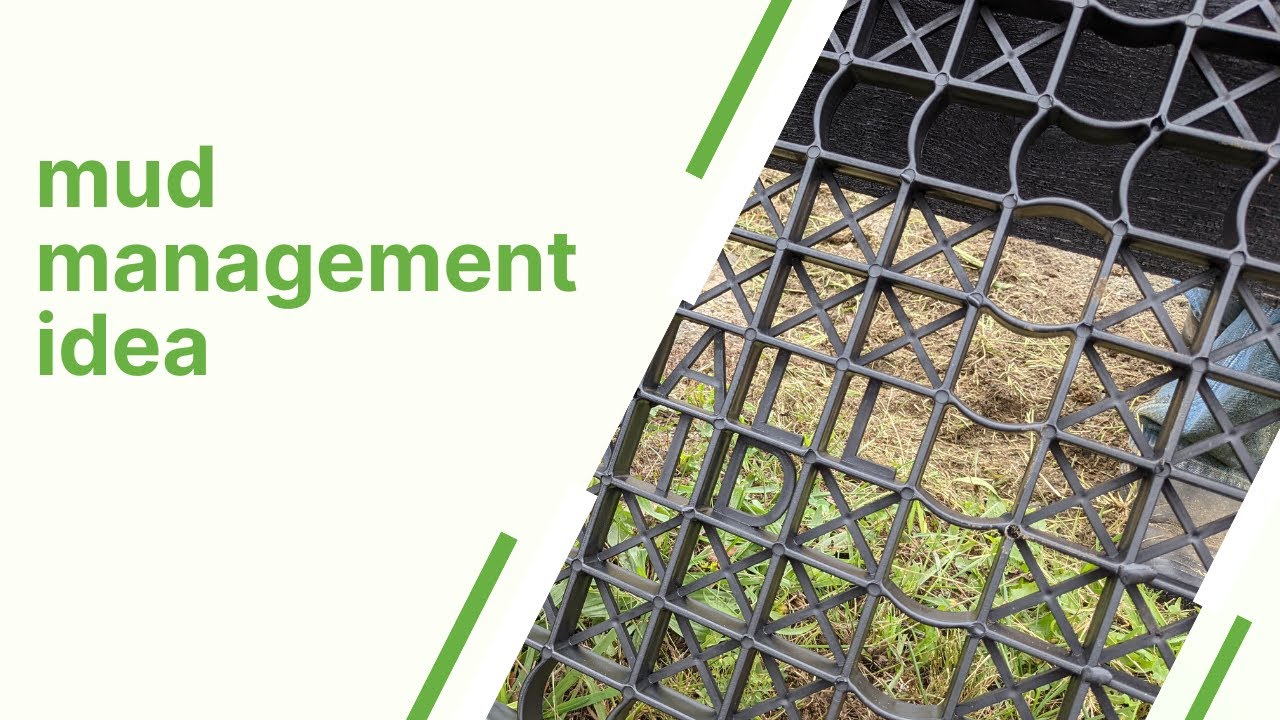
- The same goes for gates and paths. You can use gravel in these high-traffic areas, or you could use specialized landscape and driveway materials that are like these giant solid grids, which allow you to backfill with stone or stone dust and help prevent mud.
- I’ve also heard that using old carpeting or rugs in these areas turned upside down is great. They will eventually get covered in dirt and mud, but for short-term use, these might be a great option for busy areas in the paddocks.
- Also, alternating turnout areas and rotating pastures is great because if the grass is overeaten, it just creates more mud.
Hoof care tips
- Talk to your farrier about your horse’s farrier schedule. Summer creates faster-growing feet, and if that is your muddy season, you might need to shorten the interval between farrier visits.
- If your horse typically wears pads or inserts, they might need to be removed during extra-muddy seasons to give the soles added airflow. It’s a fine line between protecting the soul and helping to prevent bacterial infections. If thin souls are an issue, then maybe the pads need to stay on.
- Find a hoof pick with a narrow, pointy tip to really get deep in the grooves and along the junction between the horseshoe and the sole. Having a stiff brush or a toothbrush handy is also great to clean out grooves, as is having a hose nozzle with multiple settings, including a very powerful jet setting.
- And keep some thrush treatment handy so you can treat any potential infections as soon as you start smelling that strong thrush odor. Avoid using bleach, as thrush can create wounds, and you definitely don’t want to put bleach into a wound.
- Take pictures of your horse’s hoof at farrier visits and then compare as that hoof grows out to notice any changes over time. Started addressing tiny cracks with some hoof thrush medication, and if a tiny crack starts becoming a much bigger crack, definitely call your farrier and vet for advice.
Hoof care for muddy conditions often involves staying ahead of the curve. Feed your horse well, know their hooves and their habits, groom your horse daily, attend to their hooves multiple times a day if you can, and rely on the experts in your area and your horse’s team to help prevent bad skin or hoof infections.
Frequently Asked Questions


Feed your horse's hoof health from the inside out.

This is the strongest hoof pick available!

and adds a nice sheen!

These boots are my favorite for wrapping hooves with poultice or clay and a diaper. No more duct tape boots! You can also use inserts with these for more squish.

The gold standard for stinging hooves and anytime you need to pack the hooves.


If hooves are your jam, this book is for you.

A simple and trusted hoof supplement.


References
Beasley, B. (2024). Thrush in horses. Merck Veterinary Manual. https://www.merckvetmanual.com/musculoskeletal-system/disorders-of-the-foot-in-horses/thrush-in-horses
Beasley, B. (2024). White line disease in horses. Merck Veterinary Manual. https://www.merckvetmanual.com/musculoskeletal-system/disorders-of-the-foot-in-horses/white-line-disease-in-horses
Kentucky Equine Research Staff. (2018). Hoof dressings: Helpful, harmful, or humbug? Kentucky Equine Research. https://www.ker.com/equinews/hoof-dressings-helpful-harmful-humbug/
University of Minnesota Extension. (n.d.). Hoof abscesses. https://extension.umn.edu/horse-health/hoof-abscesses