Red Maple Trees
- As far as we know, gallic acid is the dangerous part of the red maple leaf. There are likely other toxins, as well. A green leaf on the tree is primarily made of water, which dilutes the gallic acid intensity of that leaf.
- As late summer turns into autumn, the water evaporates, and gallic acid concentration increases. Other factors, such as tree age, maple species, and climate, are also thought to affect gallic acid concentration.
- The main problem is that horses find eating these maple leaves to be really delicious! Even as little as a pound of leaves can cause damage to your horse. That seems like a lot of leaves, but have you ever seen a horse casually stop eating something delicious in small quantities? They don’t.
- If the gallic acid from maple leaves ends up in your horse, you can expect to see a myriad of symptoms as the toxins do damage.
Signs of red maple toxicity
- Horses exhibit signs of colic, lethargy, and loss of appetite as toxins accumulate. Your horse’s gums will darken and become discolored, their urine will be dark or black, and their pulse will be rapid.
- The gallic acid destroys your horse’s red blood cells and sometimes causes them to break. In either situation, those red blood cells are not carrying oxygen. These events trigger a chain reaction in your horse that damages the kidneys and causes anemia. If you start to see these signs that your horse has eaten maple leaves, their chances of recovery from maple toxicity are slim. There is no cure, only treatment with fluids, blood transfusions, and support.
- Your veterinarian must visit if you catch your horse eating red maple (or other types) of maple leaves. Early intervention is vital.
Other types of maple could be toxic trees for horses
- Maples are the most famous dangerous tree for horses. We are just beginning to understand that other maple species may also harbor the same toxins, but in varying amounts. Red maples are a sight to behold, with bright red or yellow leaves in the fall. Beautiful, yes, dangerous, yes.
- Good pasture management means eliminating maples from paddocks and from any areas where wind can carry leaves to the barn doorstep.
More on maple trees here.
Yew Shrubs
- Yews are actually a hedge plant or a smaller type of tree-looking plant. They are popular as decorative plants in landscapes. Alkaloids are the lethal factor in the yew, and usually kill a horse (or another livestock) within about 30 minutes of eating. Even a tiny amount is toxic.
- It is understood that yew’s alkaloid concentration is highest in winter, which unfortunately also coincides with the yew becoming even tastier to horses. The plant remains toxic even after it’s been cut and dried, so the removal of yew seedlings, adults, and trimmings needs to be closely monitored.
- You will rarely see signs that your horse is sick, as death can occur rapidly. You may observe neurological signs, such as stiffness or paralysis, clumsiness, tremors, respiratory difficulties, and collapse. Given that the window between eating and death is so small, your best bet is to find another decorative shrub around your horses.

Yes, the yew resembles hot pink plastic olives.
Black Walnut Trees – Poison for Hooves, too
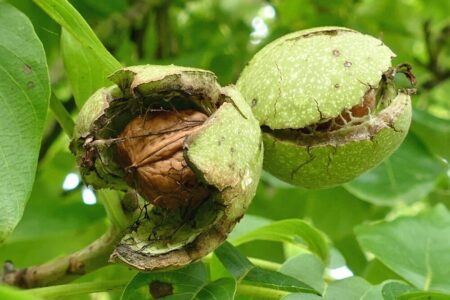
- These trees, also known by their scientific name of Juglans nigra, can cause all sorts of problems, even if your horse only stands on wood shavings that contain black walnut. Your horse can be poisoned by eating black walnut leaves, fruit, bark, shavings, and even pollen. Which, honestly, is one more reason to despise pollen.
- Juglone is a toxic compound in black walnut trees. It’s more densely concentrated in the bark and wood than in the leaves.
- When a horse comes into contact with black walnut, the first signs of trouble look like laminitis and colic. Laminitis can develop within minutes of standing on black walnut shavings, and it is accompanied by swollen limbs. Most other types of laminitis do not have swollen limbs.
- The first thing to do is get your horse out of those shavings and call the vet. The colic-like symptoms usually resolve once the toxin source is removed, but laminitis will likely persist.
- If you are considering using a sawdust-type horse bedding from a local mill, be sure they don’t process black walnut trees.
Learn more about the dangers of black walnut shavings here.
Oleander
- Oleander, while beautiful, can easily kill your horse after snacking. The toxins are cardiac glycosides and are found throughout the plant. These glycosides interfere with potassium levels in muscle and blood, leading to a decrease in electrical activity across the heart’s muscle cells. The heart slows and eventually stops. This process can take anywhere from 8 to 24 hours after an oleander snack.
- There may be hope for the horse that has eaten oleander, but often the result is death. You might see that your horse has a fast and weak pulse, trouble breathing, is going into shock, is weak, and may collapse. Certain fluids and cardiac medications can be given, but time is of the essence.

Oleander has long, flat, skinny leaves and oh-so-lovely flowers.
Wild Cherry Trees
- The leaves and twigs of the wild cherry tree contain prunasin, which is a cyanide called prussic acid. When a horse eats this, it can be fatal. Wilted and stressed leaves are peak danger times when these toxins are at their highest levels.
- When part of the wild cherry tree is eaten, your horse’s stomach acid creates hydrogen cyanide, which quickly enters the bloodstream. Here, the cyanide prevents oxygen from entering the cells, creating a backlog of oxygen in the blood and turning it bright red.
- Horses will have trouble breathing, often with flared nostrils. Your horse’s pupils could dilate, and convulsions, coma, and respiratory failure could lead to death. There are treatments, and obviously, time is of the essence here, too.
Plum and Peach trees
- These toxic trees for horses, while producing delicious fruit, are also members of the genus Prunus, such as wild cherry trees. They also operate with the same toxins, creating cyanide in wilted leaves.
Oak Trees and Their Acorns
- These giant trees pose a risk because their acorns are chock-full of tannins. Most horses find these treats tasty and will definitely fight a squirrel for one. There are also tannins in the oak leaves and buds, as well, so that’s a problem, also.
- The biggest issue with acorns, and I hear this from you guys a lot, is that small doses are usually harmless to horses. I get a lot of comments similar to “My horse eats them all the time and they’re fine!” That might be the case, but it might not be that way forever. Or they are just sick enough not to feel well and hide it from you. My point is that just because it seems OK to eat toxic things doesn’t mean it is.
- The tannins in acorns mess with how proteins metabolize in your horse. Acorn toxins trigger ulcers, kidney failure, colic, constipation, diarrhea, and other gastrointestinal tract problems.
- No one knows the dose needed to severely harm a horse, which is a double problem as there’s no antidote, either. As with other toxic trees, veterinary treatment is supportive care.
Read more about acorns and oaks here.
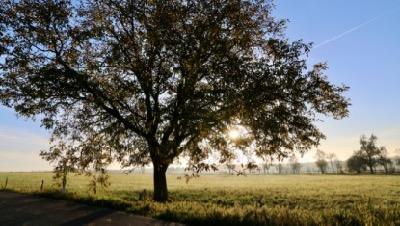
There are many oak species toxic to horses. And some don’t produce acorns for decades.
Horse Chestnut and Buckeye Trees
- The horse chestnut tree is rather poorly named, as no horse should ever eat any part of this tree. The tree is dangerous while growing, and its seeds, sprouts, and leaves contain toxins. Horse chestnut trees typically bloom first in spring, making them an attractive choice to chew on before other plants flourish.
- The toxins are suspected to be the glycosides aesculin and fraxin, as well as an alkaloid, possibly. Within a half day or so, your horse will develop neurological signs, such as muscle weakness and twitching. Colic-like symptoms and pain will also appear, and coma could be the result, leading to death.
- Some horses can recover with help, like fluids and laxatives.
Signs of Poisoning After Possible Ingestion
Any time you notice a change in your horse’s behavior, it’s a signal to investigate further. These signs could be:
- A change to vital signs: temperature, pulse, or respiration
- Increase in digital pulses, especially if paired with swollen legs, as seen with black walnut toxicity
- Lethargy
- Loss of appetite
- Stumbling, tripping, falling, twitching muscles, or any other neurological sign
- Diarrhea or excessive drooling
- Signs of colic
- Change in eye color and/or gum color, especially to yellow
What to do About Toxic Trees For Horses in Pastures
- Know the trees on your property, especially so you can tell your vet if your horse becomes sick. Even “non-toxic” trees, shrubs, and plants can cause a horse not to feel well, as those things are not part of their daily diet.
- Consult an arborist or dendrologist to identify trees. Most tree services have one on staff.
- A tree service can professionally remove toxic trees and collect debris from pastures and surrounding areas. For most tree removals, it’s not just as easy as chopping something down. The roots and stump need to be killed and removed.
- You may be tempted to leave some toxic trees up around parts of your farm that horses don’t visit. Please consider wind carrying pollen, leaves, seeds, and branches to areas accessible to horses. If a wind storm is powerful enough to rip siding from a house, it’s powerful enough to carry branches and leaves across a farm.
- I often hear that poisonous plants taste bad so that horses won’t eat them, but honestly, that’s bunk. Horses eat a lot of things that taste bad and are harmful, like buttercups! They also eat many things that taste delicious and are dangerous, such as maple leaves and acorns.
Identification resources about toxic trees for horses:
https://www.arborday.org/trees/whattree/
http://puut.luontoportti.fi/index.phtml?lang=en
https://gobotany.nativeplanttrust.org/simple/
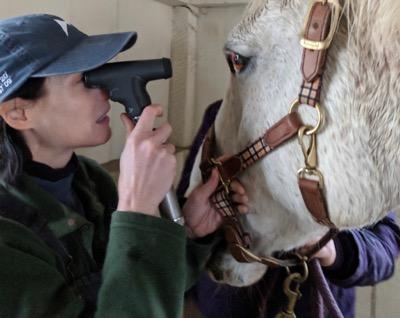



Every horse owner needs a digital thermometer for fast and accurate vital signs