
Warmer weather means flies and other insects buzzing around you and your horse. Not only are they annoying, but these pests also transmit disease and encourage stomping. You need to control pests environmentally and topically on your horse. Sprays and traps are popular options to manage pesky flies, but do you know the ingredients of fly sprays and how they work?

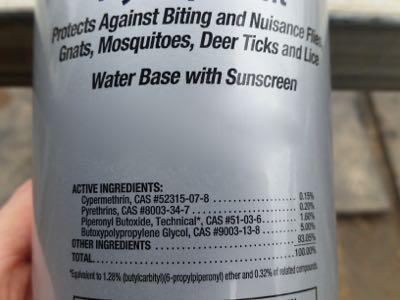
It’s always a good idea to know what you are putting on your horse.
Categorizing Fly Spray Ingredients From Conditioners to Repellents
Fly repellents and sprays have a long list of ingredients, which can be broken down into a few categories:
- Repellents
- Insecticides (kill the flies)
- Carriers
- Fragrance
- Conditioners
- Pyrethrin life extenders (prevent the active ingredients from breaking down so quickly)
- Fatty acids
Common insecticides can be natural or synthetic
- The ingredients can be natural or synthetic. The following briefly introduces some of the common ingredients in fly sprays, as it’s always a good idea to know what you are putting on your horse.
- Some sprays at your local tack shop contain pyrethrins. Pyrethrins are biodegradable, organic compounds derived from chrysanthemum flowers. Pyrethrins act on insects’ nervous systems, making them an insecticide.
- Pyrethroids are artificial pyrethrins and are another type of insecticide. Cypermethrin and permethrin are the most common examples. These are toxic to fish and other aquatic animals. Pyrethroids are more stable than pyrethrins and therefore provide longer protection.
- You may also come across piperonyl butoxide (BPO), which is basically a steroid for pyrethroids and pyrethrins, increasing their potency.
- You may also find many essential oils in fly sprays, including peppermint, citronella, and eucalyptus. These are natural and very effective against mosquitoes but may have limited effects on biting stable flies.
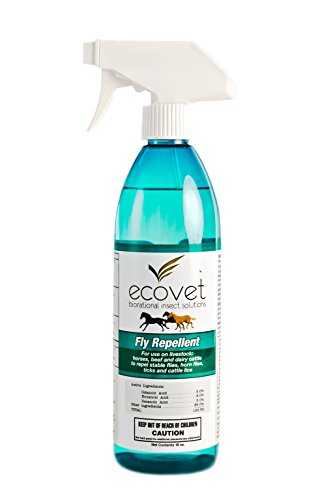
- More novel products, like Eco-Vet, use fatty acids to create a smell that camouflages your horse, essentially hiding them from the insect problem.
Note: Many of these ingredients are toxic to cats and may cause death. Never use them around cats or touch cats after spraying.

Know Your Pests – Gnats, Flies, Mosquitoes, and Ticks
- There are many types of annoying insects for horses, and each has their own best ingredient to ward them away.
- For gnats that create sweet itch, look for pyrethrins, pyrethroids, picaridin, and essential oils.
- Biting flies dislike permethrin and pyrethrins, along with citronella and lemongrass oils.
- For larger horse flies and greenheads, you may be out of luck. These giants require huge amounts of products like permethrins and cypermethrin to make a dent. Large traps specific to the type of insect are your best bet.
- Tick prevention is best with permethrin, cypermethrin, and pyrethrins.

Fly control products can be roll-on, sprays, even lotions and goops.
Fly Spray Application Best Practices
- When applied according to directions and using safe methods (like not spraying your horse’s face), you will have success with fly sprays.
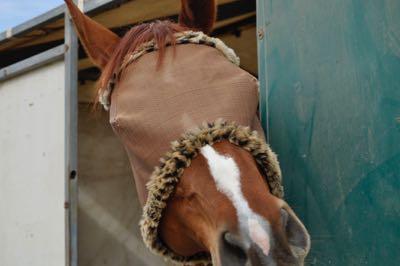
- Use in combination with sheets, boots, and masks for maximum protection.
- Use a mitt, cloth, roll-on, or your hand to apply any spray to your horse’s more sensitive areas, like the exterior of ears and down the face.
- Avoid applying above mucus membranes (eyes, nose, under the tail) in case the product drips down.
DIY Horse Fly Spray Ingredients
- If you like to putz around in the kitchen, you could make your own fly spray. Here are some common ingredients to avoid:
- Avoid oils that are designed for burning or fuel. Citronella oil has two forms – the kind you use in torches, and the non-burning kind.
- No kerosene.
- No household detergents or cleaners.
- Much safer ingredients to try for home remedies are:
- Skin-so-Soft
- Essential oils
- An emulsifier such as soap or polysorbate 20, which blends the oil and other water-based ingredients.
- Apple cider vinegar
This article has loads of homemade fly spray ideas, too.
- Whatever topical control you use, make sure it matches the insects you are battling. Monitor for skin reactions, and use traps, predators, and diligent pasture and manure management. Follow the directions, and be super diligent in monitoring for possible skin reactions. Also, remember that fly spray is part of the larger battle. The environment needs attention, too.
- Just for good measure – if you do try a fly spray that irritates – call your veterinarian and get thee to a wash rack! Lots of mild shampoo and unbelievable amounts of rinsing.


FAQ’s


This spot-on product kills and repels ticks and helps with mosquito control.


Fair warning - this spray has an odd aroma - but it works for some types of flies!


This lightweight sheet is great for horses that don't aim to tear up their blankets. Nice and airy, but thinner.