
Horse coolers are the most versatile blanket you can use on your horse, and there are many types of horse coolers. Irish knits, wool, and fleece coolers all suit different situations and climates, but all function to help your horse dry. Pick the one that best suits your horse and the season. And contrary to their name, coolers don’t typically keep your horse cool. Instead, they keep them warmer and drier.

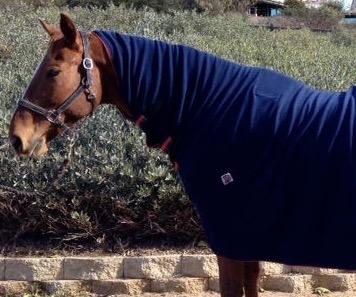
Coolers come in all shapes and sizes – I love this Wiksmart with the neckpiece and belly cover.
Uses For Horse Coolers
- The main purpose of a horse cooler is to wick moisture from the horse’s body in record time. They are horse blankets with a specialized purpose, and should not replace a traditional stable or turnout blanket. You can use horse coolers to:
Aid your horse’s body temperature regulation
- Keep your horse warm as you remove blankets and begin grooming and tacking up in cooler weather. Keep your horse warm in the crossties as you work. You can fold over sections, groom them, and place the cooler back over those sections.
- For older horses or those with arthritis, muscle stiffness can get a head start on warming up.
- As you start your ride, protect your horse from the colder weather with a quarter sheet cooler that covers their flanks and haunches. Some designs allow you to cover your thighs as well, providing necessary warmth for everyone.
- After riding, coolers are ideal to toss on your freshly exercised horse. They will wick away moisture immediately, providing lightweight temperature regulation to help your horse return to a normal body temperature slowly and safely as they dry. This is especially important in cold weather.
- Coolers are great for keeping you warm while you hang out in the crosstie area, cleaning tack, and tidying up. They are also good for wrapping around your legs if you are ringside with the video camera.
Help dry your horse
- Coolers make excellent drying aids when using the hot-towel method of grooming in the winter months. This grooming technique uses hot and wet towels to clean sections of your horse at a time. After a thorough scrubbing, the hair will still be damp, and a cooler will help dry the area and prevent it from getting cold.
- Use coolers after bathing to help the drying process. In summer, choose a knit to allow for more airflow. A cozy neck fleece cooler covers more of your horse to help dry and protect the hair if your horse rolls while wet. Normally, this is not a problem, but if you are clipping, you want your freshly bathed horse to stay clean.
- Light airmesh coolers called scrims are popular at horse shows to reduce dust landing on your freshly groomed horse. The airmesh fabric is the perfect weight for keeping clean and allowing maximum airflow in hot weather. These also provide ultimate comfort in hot weather, helping keep flies and dust away while keeping good airflow.

Do You Need a Cooler?
- Some of you may wonder if a cooler is even necessary, and it may not be in your climate. They can be a functional addition to your horse’s wardrobe if your horse needs help drying or protection from cold air during grooming and riding.
- With so many styles available, the type of blanket often comes down to need and personal preferences, such as a thick, deep-pile blanket or a lightweight scrim.

This wool cooler likes to steal Miguel’s hair. But wool is the best fabric for wicking away moisture quickly but also loves to hang onto hair.
Types of Horse Coolers
- There are pros and cons to each cooler style. And, there are many style features and high-quality options at affordable prices. Some specialty coolers can also harness the power of far infrared energy, act as a therapy mesh cooler, or add a touch of luxury to your horse’s horse show outfits.
Wool
- Wool coolers are the gold standard for wicking properties and ultra-drying rugs. There is no moisture that a high-quality wool blanket can’t overcome. If you have a horse with a thick coat, wool coolers may be the best option. They tend to collect hair, so ensure your horse is thoroughly groomed and brushed before use.
- It’s somewhat easy to clean a wool cooler and a pain in the butt at the same time. They can’t be washed in a washing machine, so you will need to do it by hand.
- The traditional wool style is a large square or rectangle that you toss over your horse for poll-to-tail coverage. Or, find one that is a more modern shape, like that of a stable rug.
Learn how to clean your wool coolers here.
Fleece
- Fleece coolers are versatile and come in a wide range of colors and thicknesses. Generally speaking, a thicker cooler goes best with thicker coats for maximum sweat wicking, and is also great for thin coats in cold weather.
- Heavier fleece is also more likely to stay on your horse during warm-up and cool-down, diminishing the risk of the wind whipping it around.
- Most are totally fine in the washer and dryer. They are also generally more affordable than wool-style horse coolers.
- You are more likely to see neck coverage on a fleece cooler than with other fabrics.
Irish knits
- Knit coolers, or Irish knits as they are sometimes called, are ideal for warmer temps. Their weave is very open, and the cotton doesn’t wick moisture away as well. They absorb the moisture instead, which is fine for summer.
- Irish knits are best used in warmer weather, or under a wool or fleece cooler. If you are layering them, remove the knit as soon as it gets damp. You could also use an Irish knit over a fleece or wool cooler if those don’t have straps and you need to secure everything.
Features of stylish coolers
- Coolers are the ideal blanket for grooming, warming-up, drying, and cooling out. Their classic design may also have some fun and fashionable features:
-
- The iconic stripe pattern
- Reliable protection against a sweaty horse getting chilled
- Ease of use as a travel rug (with proper leg straps, chest closure, and belly strap)
- Some have traditional hip ornaments and custom embroidery

This wool cooler has a hidden belly strap (sewn to the inside) and a strap under the tail.
Safety tips for using coolers
- Play it safe when using coolers by securing them to your horse. Use the chest closure and leg and belly straps. Tail cords are included in many styles, but should not replace leg straps.
- Change the blanket to a fresh one if it becomes saturated.
- Don’t use them instead of a proper turnout sheet or stable blanket. These horse drying rugs are not the best shape, fabrics, or design for turnout.

The airy Irish Knit! I don’t use this style in the winter.
Go Shopping
Stock up here for your horse supplies! As an Amazon Associate, I earn from qualifying purchases, but it’s ZERO extra cents to you. As a Walmart Associate, I earn from qualifying purchases as part of their affiliate plan. I appreciate your support! You can also visit my Amazon storefront here: PEG storefront.
Square coolers are traditional and versatile, and wick more than a fleece cooler.


Keep your horse dry and spiffy with this cooler combo. Love the neck for fast drying.


Soak up all the sweat and water with this Irish Knit, best for warm weather use.

This is a great, lighter alternative to a Back On Track


A classic pattern in a modern colorway. And it's so thick!